New working paper: “Empires of grain: State Building and Market Integration in French West Africa, 1915-1950”
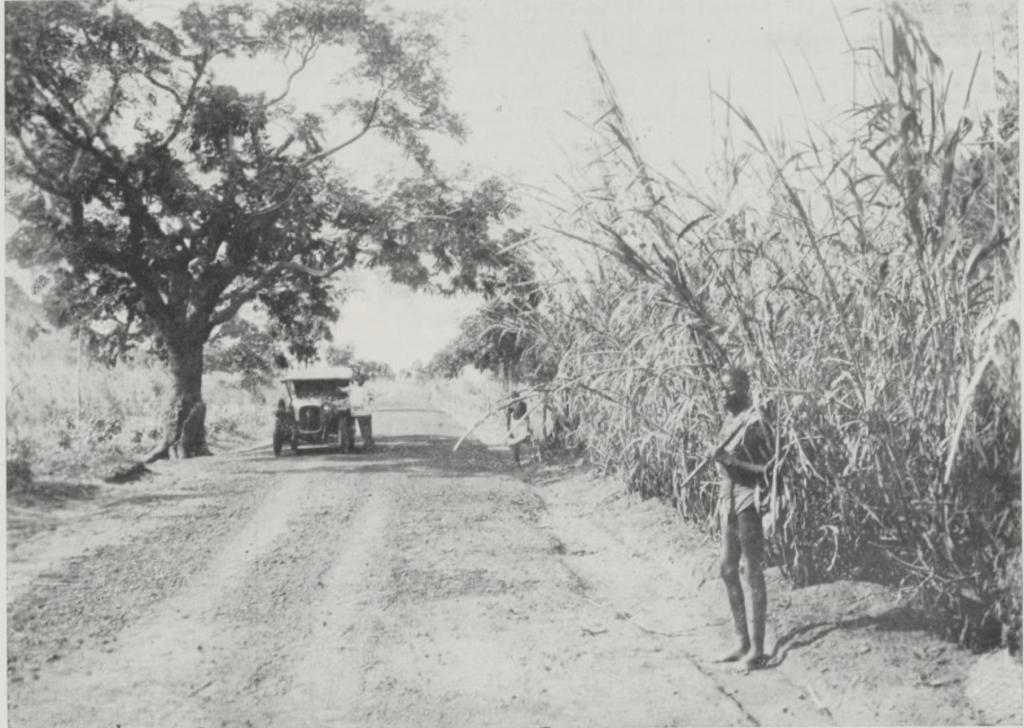
I have a new working paper out at the AEHN series, this time on West Africa. It’s a long time in the making, mainly due to the huge amount of new data it contains, and it constitutes, to my knowledge, the first attempt to quantify the extent of market integration during the colonial period for any part of Africa between South Africa and the Sahara. What I find is considerable integration in grain markets — for rice and salt — over the colonial period, driven by infrastructure investment (intended largely, it should be said, to evacuate cash crops and move…
Keep readingNew working paper: the political economy of African food prices in the long run, 1900-2020
I have a new working paper paper out with my colleages Ewout Frankema, Michiel de Haas and Tanik Joshipura on the history of maize markets in East Africa, drawing on a new dataset of thousands of maize prices observations we have compiled from primary and secondary sources.
Keep readingResearch note: the Ethnographic Atlas’s ‘focal year’ is not a year of observation
After spending maybe more time than I meant to digging into one of the most popular sources for the econometric history of Africa, I found some time to write up one very small problem with George Murdock’s Ethnographic Atlas and its uses by economists: the ‘focal year’ variable, often used in regressions as a control for the ‘year of observation’ of the data, is not actually a year of observation, and if that’s what you’re using it for, then one of your controls may be measured with error (which, depending on the correlation structure of your RHS variables, may mean…
Keep readingA little social table from the Futa Jallon highlands in 1910
Ok, that’s promising more than I can give, but reading today Paul Guébhard’s account of the Futa Jallon highlands in what is now Guinea in 1910, I discovered his little table that tries quantify the livestock holdings of the Fulɓe pastoralists who lived in the region. I have been thinking a lot about cattle recently, following the awarding of the Nobel Prize to a trio of scholars who are generally known as “AJR”: Daron Acemoglu, Simon Johnson and James Robinson. In their famous 2001 paper, they tried to estimate the impact of secure property rights on national incomes, on the…
Keep readingNew paper
My paper with Emiliano Travieso on the resilience of Northern Nigeria’s textile belt under colonial competition has been published in the latest issue of the Economic History Review.
Keep readingHow far were local goods transported by rail in colonial Africa?
I’m working on a major new project measuring market integration and food markets in tropical Africa and Southeast Asian in the colonial period, and in particular on the integration of grain and salt markets in French West Africa. Though a great deal has been written both about railways and their impact on the one hand and local trade on the other, there is still a lot of historiographical blanks on the question of the impact of the construction of colonial railways on local product markets. One question I am trying to answer is: how geographically wide were grain markets in…
Keep readingThe contested real estate empire of a colonial Senegalese businessman
While looking for information on Dakar’s mid-century housing crisis, I came across a little legal story that played out in the pages of the newspaper Paris-Dakar in 1948. This was the year of the death of Alassane N’Dir, a major landowner in Dakar and a prosperous businessman and philanthropist. By the time he died, N’Dir had been an active merchant for over half a century, since starting up in 1895. He first made his fortune trading kola nurs in Côte d’Ivoire. In that colony, N’Dir acquired a portfolio of urban land from early on: in 1906, he purchased a block…
Keep readingTransport of crops to market — a little fact
In the 1970 world census of agriculture, seven countries asked farmers how they transported their crops to the first point of sale (to a market, or a trader, etc.). All seven countries were reasonably poor (under US$1000 per capita GDP) but it is striking how common transporting crops to market by foot was in the two African countries compared to the South/Central American countries and Jordan (still a low-income country at the time the census of agriculture took place, though it grew spectacularly in the 1970s due largely to remittances). Of course, there are physical differences between the countries —…
Keep readingThe Xi-Biden summit and the global economy
I have a column in the Australian Financial Review on the US–China summit and the lack of leadership in the global economy.
Keep readingNew article: How accurate are the British colonial Blue Books?
I have a new article out at the Economic History of Developing Regions on the British Blue Books, a staple source of statistical information for historians of the British Empire. In the article, I compare the retail prices listed in the Blue Books with market prices collected from African newspapers in the late nineteenth and early twentieth centuries, and show that in some contexts the Blue Books can be an unreliable source for price history.
Keep readingSomething went wrong. Please refresh the page and/or try again.
Follow My Blog
Get new content delivered directly to your inbox.
 Tom Westland